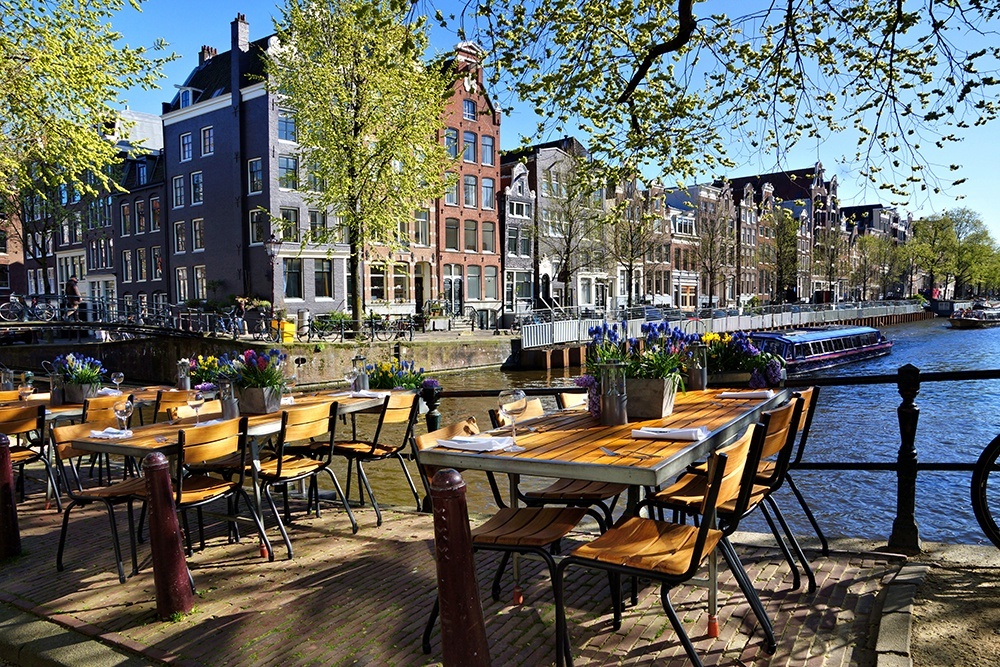
It is unclear for how long. The virus has ensured that it is quiet in the shopping streets. The public remains at home, and in the centre of The Hague it seems as though a bomb has fallen.
This situation will have far-reaching consequences for the tenants of retail or catering space. After all, if little or no turnover is achieved, their business operations will be endangered. Tenants will no longer be able to pay the rent. Then the landlords’ interests will also be harmed.
Defect?
Can tenants successfully try to pass the financial ball on to the landlords? For example, with the argument that they are not provided with rental pleasure, because their shops have been closed by the government? In case law, an impairment of a tenant’s rental pleasure can quickly be regarded as a “defect” within the meaning of the law. In that event, the tenant of a business property can claim a reduction in rent or suspend payment of the rent, unless this is contractually excluded.
Although disturbances that do not directly relate to the use of the rented object can sometimes be regarded as a defect, this does not apply if there are external factors that the landlord cannot influence. For example, the impoverishment of a certain neighbourhood will have consequences for the enjoyment of renting and cause declining sales, but cannot be regarded as a defect that can be pointed out to the landlord; the landlord has (as a rule) no influence on that situation.
It is best to draw a parallel with the government-ordered closure of a shop or café in connection with the virus problem. The landlord also has no control over this. As far as I am concerned, there is therefore no question of a defect in the outlined situation and the tenant cannot rightfully claim a reduction in rent or suspend his payments.
Can the fact that the shoppers remain at home, causing the tenants’ turnover to decline, be regarded as a defect? That is not the case either. Disappointing visitor numbers do not normally constitute a defect, which is determined, for example, in case law on shopping centres that are not running smoothly. The consequences can therefore not be passed on to the landlords by the tenants.
Unforeseen circumstances
Are tenants left empty-handed in legal terms if they can no longer pay the rent in the given situation? Perhaps article 6: 258 BW offers an escape and they can appeal to “unforeseen circumstances”. The article in question states: “The judge may, at the request of one of the parties, amend the consequences of an agreement or dissolve them in whole or in part on the basis of unforeseen circumstances which are of such a nature that the other party cannot by standards of reasonableness and fairness expect the unchanged agreement to be upheld.”
The tenant could therefore rely on unforeseen circumstances to demand that the rent be reduced or that the lease be (partially) dissolved. It is fair to note that case law does not readily assume that there are “unforeseen circumstances”.
Tenants could also argue that claiming compliance with the obligations arising from the lease (read: paying the full rent) is contrary to reasonableness and fairness. Or they could invoke force majeure. I refer in that context to a recent blog by my colleague Mechteld van Veen-Oudenaarden dated 12 March 2020.
I think that the likelihood of success in any legal proceedings is limited for the tenants and that the golden rule “pacta sunt servanda” (agreements must be kept) will prevail. But perhaps the corona crisis is such an extreme / exceptional situation that the tenants’ views shall nevertheless be honoured. In this and several other respects, the consequences of the coronavirus remain unpredictable.
Do you have a question about this topic? Please do not hesitate to contact me.