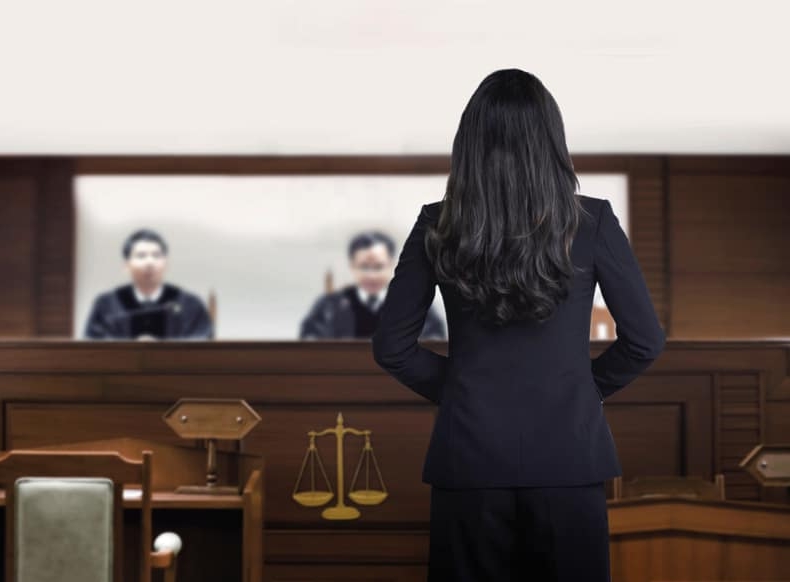
Once all documents have been exchanged and pleadings have been conducted, a date for a ruling is set. However, to the frustration of those involved, such a ruling is regularly ‘stayed’. Parties sometimes have to wait patiently for a year for a ruling. Not infrequently, the mere passage of time in proceedings causes clients to have psychological problems: a sword of Damocles hangs over their heads for years.
The judiciary can do little about the slow pace of court proceedings, a recent study shows. Most judges structurally work overtime. To deal with this problem, 800 ‘new’ judges would have to be recruited. There are none. These are the consequences of the cuts to the judiciary initiated during the Rutte II cabinet.
Would the administration of justice by ‘laymen’ be a solution for the staff shortage? Non-lawyers would then rule in conflicts.
Local businessmen or bankers
The other day, I spoke to a retired lawyer who had worked for a Dutch law firm in France for several years. To my surprise, he said: “I had to learn to plead in a very different way. The judges who handled commercial cases were usually not lawyers, but local businessmen or bankers. You learn not to present technical-legal arguments, because they don’t understand them.” Trial by jury is common in Belgium, England, Spain, France and Italy, for example. That is, citizens are required to sit on a jury and administer justice.
The trial of ten suspects in the 2016 Brussels terror attacks began in Belgium in December last year. Justice is rendered by the ‘court of assizes’, a 12-member people’s jury. The federal prosecutor of the Belgian prosecution believes that assize justice should be abolished. In response to questions by an NRC journalist, he said: “If you need to have a major surgical procedure performed, you don’t just hand a scalpel to 12 people you happened to bump into on the street.”
Trial by jury in the Netherlands?
In our country, people generally think the same way. Fear also exists of the influence of the media and pitches from slick lawyers. Jurors could easily be led astray in their judgements. For the time being, trial by jury is not a solution to the staff shortage in the Netherlands. But things can change.
More information
Do you have any questions or would you like more information? Please contact us directly if you have any legal questions.
This column ‘Trial by jury’ was written for Den Haag Centraal. Raymond de Mooij wrote a monthly column about what he experiences in his practice.