





14 September 2026
Drawing up maintenance arrangements; a good idea?
Is it worthwhile to record maintenance arrangements? In this article, I explain why it can be important to make clear arrangements on this issue.
Read more
Internationals are often uncertain of their rights and options when it comes to getting divorced in another country.
What are the possibilities? Which court has jurisdiction? Which law will apply? And what are the potential impacts on finances, living arrangements, residence status and future emigration?
Our team of divorce lawyers are accustomed to helping expats navigate an international divorce in the Netherlands. They can advise you on the issues that matter most in your situation – whether that is getting the best deal for your children, partner alimony, the division of matrimonial property or reaching an amicable agreement on the settlement of the divorce.
As a multidisciplinary law firm, we can also offer in-house assistance with related topics such as pension law, immigration law, business law, real estate law and inheritance law.
If you live in the Netherlands, the answer in most cases is yes, you can probably get divorced here in the Netherlands, regardless of your nationality. If you are currently not living in the Netherlands and do not have the Dutch nationality, it may be that you cannot get a divorce in the Netherlands. A lawyer can give you more certainty about this.
If you can get a divorce in the Netherlands, the divorce itself will take place under Dutch law. This means that you do not need a reason to divorce. If one of the spouses wants a divorce, it will be pronounced.
The fact that Dutch law applies to the divorce itself does not mean that Dutch law applies to all the different topics of the divorce. It may be that Dutch law applies to the divorce, but that the law of another country applies to, for instance, maintenance or the division of the matrimonial property. Being able to get divorced here just means the Dutch courts can rule on your divorce – not that Dutch law will apply to any aspect of it.
If you can get a divorce in the Netherlands, the next step is to determine which law applies to each of the various subjects that are dealt with during a divorce. These various subjects include the divorce itself, children, maintenance, alimony, pensions and the division of assets.
If you have made (legal) agreements before or during the marriage about which law applies to the subjects then, in principle, these agreements apply. If you have not made such agreements, it must be determined for each subject which law applies. In the Netherlands, we look at the applicable treaties for this.
The legal system matters because the financial consequences of marriage and divorce differ per country.
If Dutch law applies to your matrimonial property and you did not arrange anything before or during your marriage (you did not make a prenuptial agreement), then if you were married after 1 January 2018, it means that you were married in a limited community of property. Everything you and your spouse acquired during the marriage (except inheritances and gifts under exclusion clause) should be divided in half in the event of divorce.
If a foreign law applies to the matrimonial property, the financial consequences in the event of divorce may differ from the 50-50 division under Dutch law. The same goes for partner alimony and child maintenance. It may be that not Dutch law, but a foreign law applies to determining maintenance. As a result, you may not be entitled to maintenance or have only a limited right under foreign law.
Our lawyers can help you determine which law applies and provide insight into the consequences this has for you.
If you have an international marriage and are considering getting a divorce in the Netherlands, our lawyers can help determine which law applies to the various subjects of the divorce. With the experience and knowledge we have in-house, we can help you settle the consequences of divorce and find solutions. Thanks to our many years of experience with international divorces, we know what to look out for.
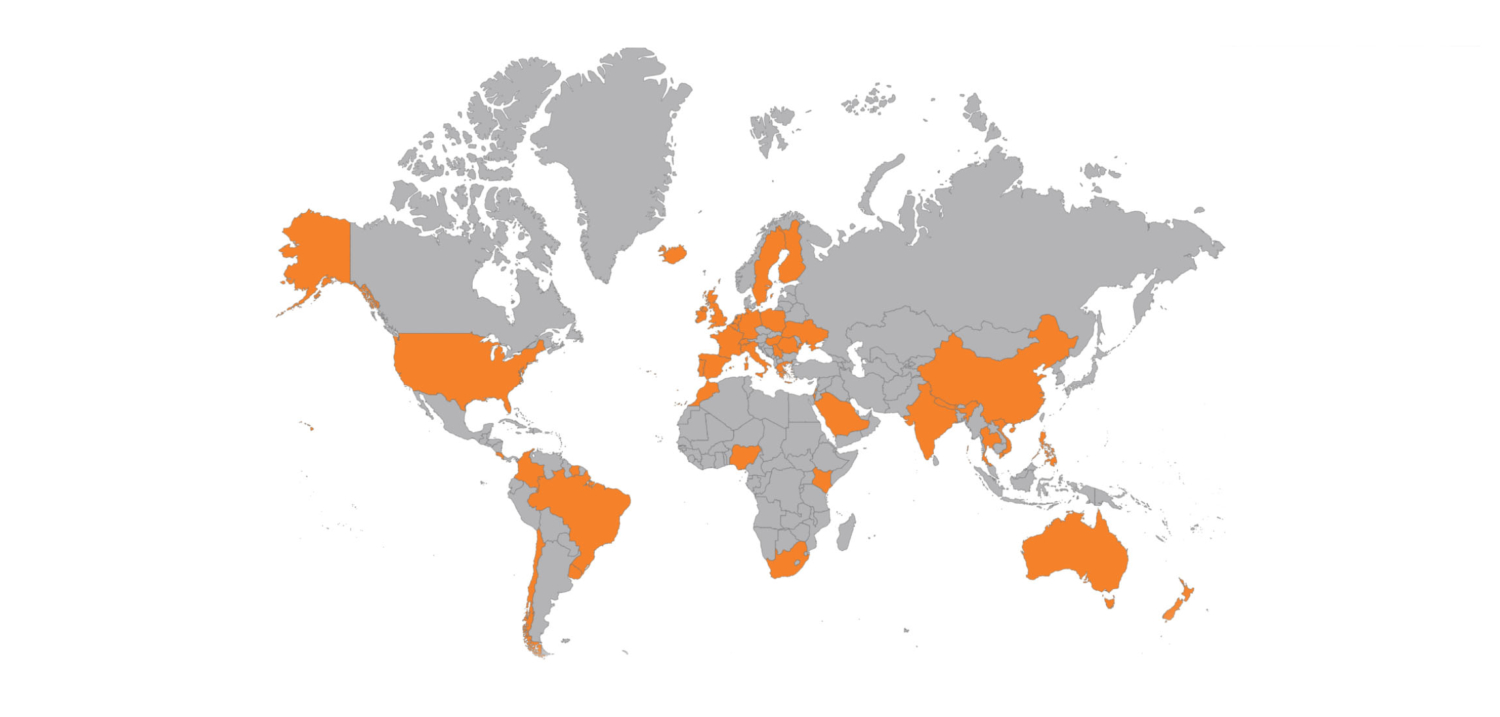
On an annual basis, our office deals with dozens of different legal systems from all over the world. In 2020, for example, we worked with 45 legal systems. As a result, we have the necessary experience in-house about the content and consequences of the various legal systems.
If advice must be sought on foreign law, we also have an extensive circle of international legal partners that can provide us with advice.
Are you thinking of getting divorced? Would you like expert advice? Fill in the form or call us on 070-3615048
"*" indicates required fields
"GMW Advocaten has provided me with excellent assistance with a family law issue. Smooth response, no-nonsense attitude, proactive communication. Recommended!"
Google review
Family law
“My experience with GMW lawyers has been excellent. Mr. Thijs Sarneel was my lawyer in a highly difficult, complex and international case. He is creative, hardworking and effective. He communicates clearly and diplomatically, also with the counter-party. Mr. Sarneel managed to win the confidence of our counter-party, which I experienced as exceptionally strong. It highly facilitated the complex negotiations and I am thankful for that.”
Online review
Family law
"Even though you'd rather not have to do it, we contacted GMW lawyers to a dispute regarding alimony. This is handled very professionally, neatly and respectfully by, initially Mr. Ryanne van Manen and then Mr. Dylan Bertsch. Very pleasant contact and will certainly recommend GMW lawyers."
Google review
Family law
"Lise-Milou Lagerwerf provided invaluable guidance throughout my divorce proceedings. She was always prompt with her responses and provided clear advice on all my options. Her assistance made an unpleasant situation much more bearable. I feel confident that we came to the best agreement possible due to her expertise and support."
Google review
Family law
14 September 2026
Drawing up maintenance arrangements; a good idea?
Is it worthwhile to record maintenance arrangements? In this article, I explain why it can be important to make clear arrangements on this issue.
Read more
10 September 2026
Interest rate compensation when dividing the marital home after divorce
A divorce often involves difficult decisions. One of the most significant questions is what should happen to the jointly owned home.
Read more
26 August 2026
Divorce Day
On Friday 11 September 2026, it will be Divorce Day. This day was established by the Association of Family and Inheritance Lawyers Divorce Mediators (vFAS). On Divorce Day, you can visit us for free personal advice.
Read more
20 August 2026
Does personal injury compensation remain private property in the event of divorce?
On 4 March 2025, the Arnhem-Leeuwarden Court of Appeal gave a judgment illustrating how complex the division of personal injury compensation can be in divorce proceedings.
Read more
30 July 2026
How is maintenance for young adults determined in divorce proceedings?
How exactly are maintenance contributions for young adults determined in divorce proceedings? The Dutch Supreme Court provided clarification on this issue.
Read more
6 July 2026
Deferring a claim for division of the home
Upon divorce or separation, the home may be allocated to either party. This is particularly the case where the property is jointly owned and the home is not sold.
Read more
6 July 2026
How to get a prenuptial agreement in the Netherlands
Just like drawing up a will, in many countries it is normal to contact a lawyer (or solicitor) to draw up a prenuptial agreement.
Read more
18 June 2026
The business in the event of divorce with a prenuptial agreement including a periodic set-off clause that has not been implemented
What about the set-off of the business’s value? In this article, we’ll explain various situations.
Read more
10 June 2026
How should unequal contributions to a jointly owned pre-marital home be handled in the event of divorce?
On 21 March 2025, the Dutch Supreme Court clarified how unequal financial contributions to a home purchased jointly before marriage should be treated. Before the marriage, one partner may have a claim against the other because they contributed more to the purchase price. But what happens when the couple later marries under the regime of the limited community of property?
Read more